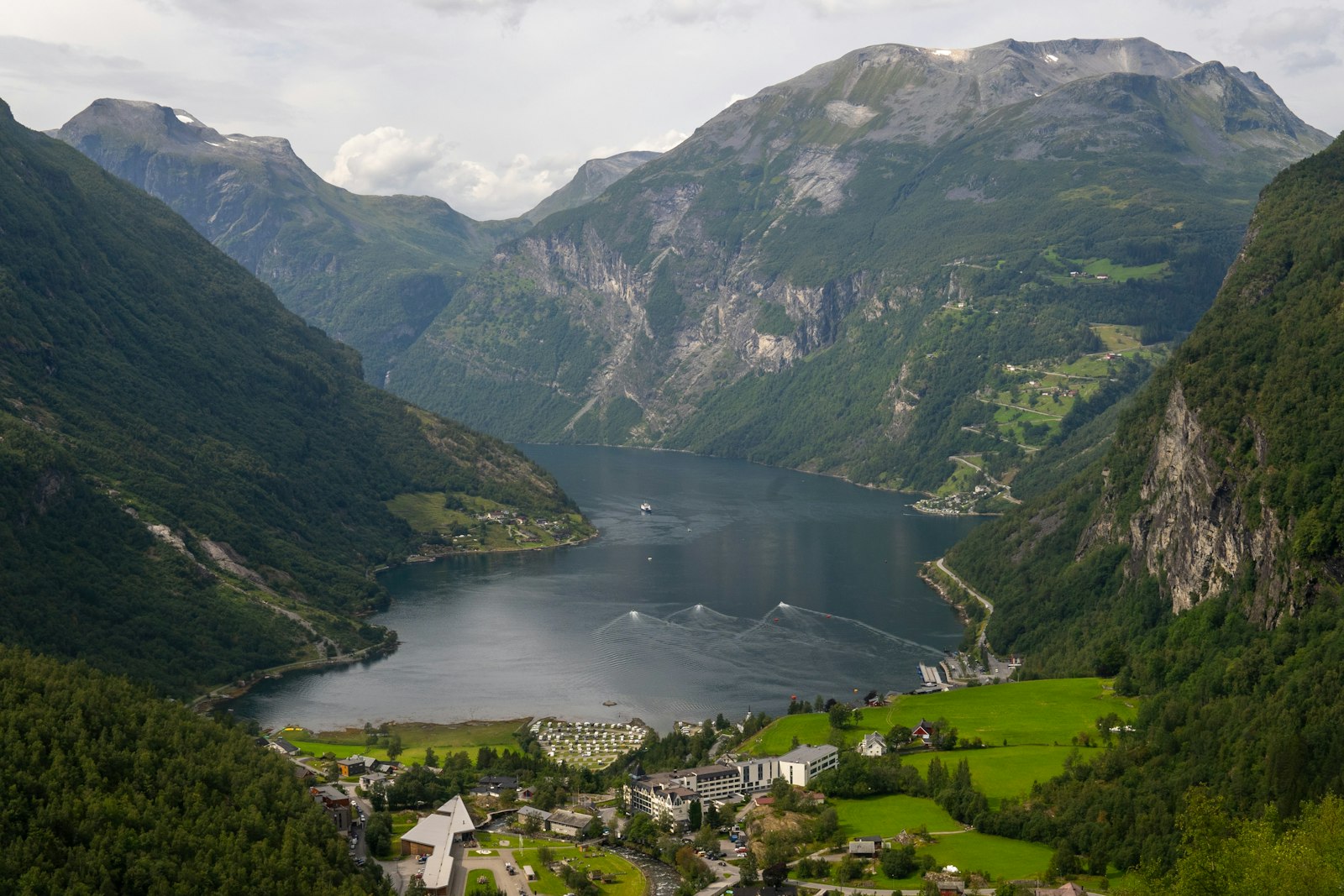
Deep, steep-sided inlets cut by glaciers, with waterfalls on the walls. Here are the fjords worth knowing and how to reach them.
UNESCO lists two fjord areas about 120 km apart as a World Heritage property: Geirangerfjord, about 60 km inland, and Nærøyfjord, about 100 km inland at the upper end of Sognefjord. Together they cover 122,712 hectares. Wikipedia gives 2005 as the year both were listed.
A 20.2 km line between Myrdal and Flåm that takes about 50 to 59 minutes. The steepest section is 5.5%, or 1 in 18, and the line drops about 866 m (another technical source gives 863.5 m) through twenty tunnels. Wikipedia says passenger service began in 1941, while a technical page says it opened on 1 August 1940.
Visit Norway says Bergen is a base for Sognefjord and Hardangerfjord, and that express boats are often the most practical way to cross a fjord. Flåm and Gudvangen are the access points for Nærøyfjord, and cruises between them pass through Nærøyfjord and Aurlandsfjord. A car ferry crosses Geirangerfjord between Geiranger and Hellesylt.
Hurtigruten recommends Geirangerfjord in summer, the busiest season with the longest days, and suggests the quieter Trollfjord and Hjørundfjord in autumn. See when to go for the weather. We could not find fjord-specific season dates from an official source, so check with ferry and cruise operators.
The Trollstigen mountain road is usually open mid-May to October or November and can close at short notice in heavy rain, while the Ørnevegen road to Geiranger is open all year, according to Visit Norway.
Geirangerfjord and Nærøyfjord are the two UNESCO-listed fjords, listed together as the West Norwegian Fjords in 2005. Sognefjord is the longest and deepest, and Hardangerfjord is the second longest in Norway.
Visit Norway describes Bergen as a base for Sognefjord and Hardangerfjord, and says express boats are often the most practical way to cross fjords.
Hurtigruten recommends Geirangerfjord in summer, and its coastal route serves Geiranger in summer only. Hurtigruten also suggests the quieter Trollfjord and Hjørundfjord in autumn.
The railway is 20.2 km between Myrdal and Flåm, takes about 50 to 59 minutes and has a steepest section of 1 in 18, according to Wikipedia.
Facts on this site come from Visit Norway, the Norwegian Meteorological Institute, UNESCO, gov.uk and the operators named, each listed at the foot of the page. Check dates, prices and entry rules with the provider before you book.