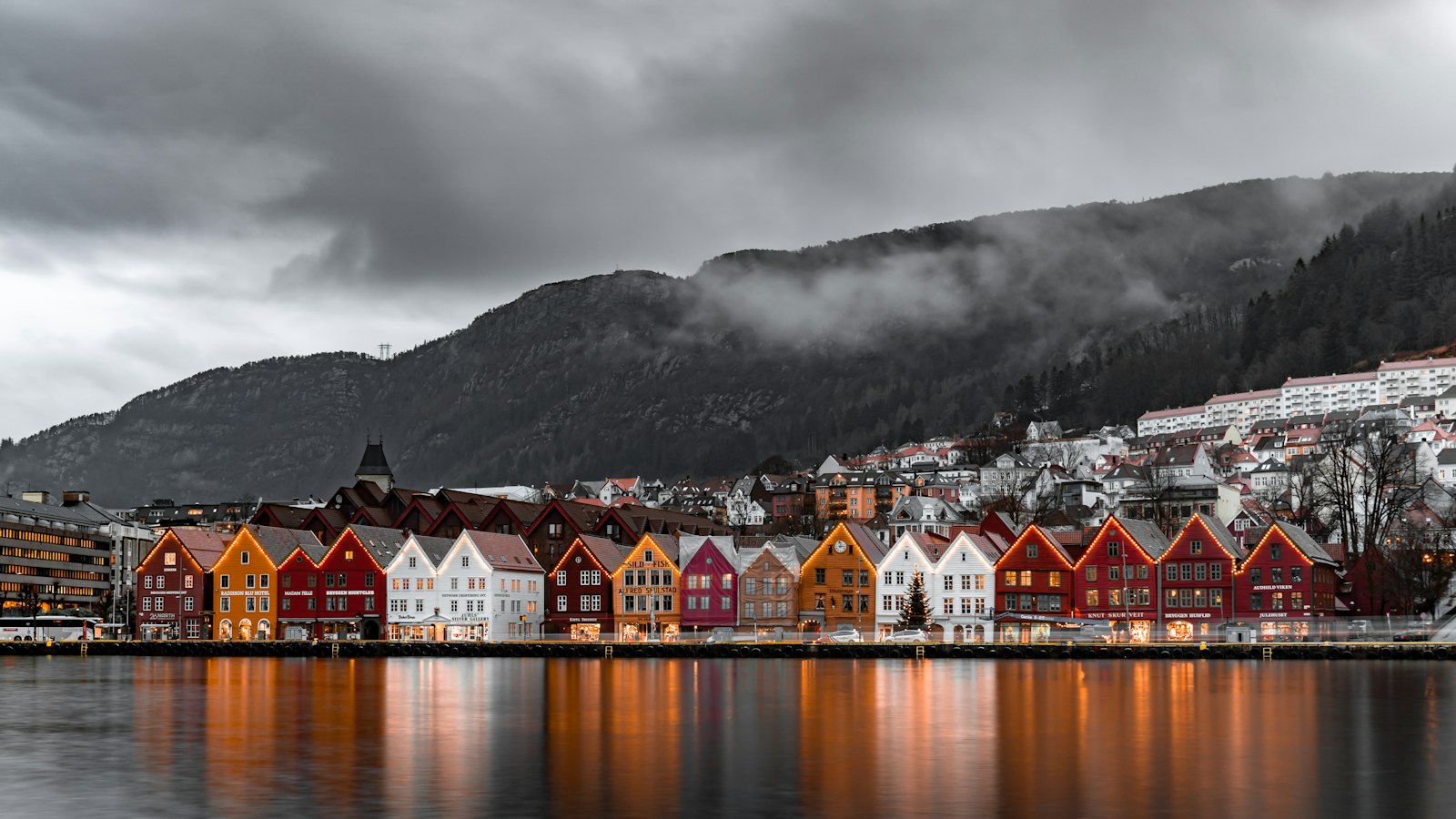
Norway's second city is a UNESCO-listed harbour town and the usual base for the western fjords. It is also famously wet.
Bergen is Norway's second-largest city, with about 294,000 residents (2024), on the Byfjorden and sheltered from the North Sea by islands. It is traditionally credited as founded in 1070.
Visit Norway names the Bryggen wharf, the harbour and fish market and the mountain views as reasons to come, and describes the city as a base for Sognefjord and Hardangerfjord.
Visit Norway says Bergen is lively from spring to autumn, with festivals, seafood and hiking, and that winter is mild with striking fjords and culture. Christmas brings concerts and a gingerbread town. Bergen is about as wet as Norway gets: Wikipedia gives about 2,495 mm of rain a year, on roughly 200 days with more than 1 mm.
Visit Norway: Flesland Airport is about 30 minutes from the centre by express bus or light rail. The Bergen Line train from Oslo takes about 7 hours, and driving from Oslo takes 7 to 8.5 hours. There are ferries from Hirtshals in Denmark and from Stavanger, and the Hurtigruten coastal route leaves Bergen for Kirkenes.
Yes. Wikipedia gives about 2,495 mm a year and about 200 days with more than 1 mm.
Yes, UNESCO listed it in 1979, according to Wikipedia.
Visit Norway describes Bergen as a base for Sognefjord and Hardangerfjord. See our fjords guide.
Facts on this site come from Visit Norway, the Norwegian Meteorological Institute, UNESCO, gov.uk and the operators named, each listed at the foot of the page. Check dates, prices and entry rules with the provider before you book.